Source Anti Blue Light Ophthalmic Lenses for Myopia, Astigmatism, and Presbyopia
Compare 25 verified listings for anti blue light ophthalmic lenses designed for myopia, astigmatism, and presbyopia correction. Buyers can evaluate resin materials, HMC coatings, and power ranges from suppliers in Danyang, China, with options for single vision and progressive designs.
Key considerations
Products List



Comprehensive Sourcing Guide
Strategic Sourcing Guide for Anti-Blue Light Ophthalmic Lenses
Understanding Product Categories and Refractive Indices
The market for anti-blue light ophthalmic lenses is characterized by a diverse range of refractive indices and functional coatings, each tailored to specific visual needs and frame compatibility. Buyers must first distinguish between the core material properties that define lens performance. The supplied data indicates a prevalence of resin-based materials, which are standard for their balance of weight, impact resistance, and optical clarity. Within this material class, the refractive index is a critical differentiator, with observed product standards explicitly citing 1.56 and 1.67 indices. The 1.56 index is frequently associated with standard single vision and progressive blue cut lenses, offering a cost-effective solution for moderate prescriptions. In contrast, the 1.67 index is often marketed for higher prescriptions where thinner lens profiles are required to reduce weight and edge thickness.
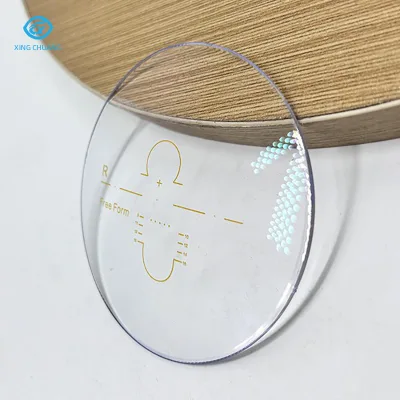
The functional scope of these lenses extends beyond simple blue light filtration. The observed product attributes list functions for myopia, astigmatism, and presbyopia, indicating that these lenses are available in single vision, progressive, and potentially multifocal configurations. The power ranges observed in the data are extensive, spanning from spherical powers of -20.00 to +20.00 diopters in some instances, and specific ranges like -6.00 to +6.00 for other models. Cylindrical corrections for astigmatism are also noted, with ranges extending up to -6.00 diopters. This variability suggests that a robust sourcing strategy must account for the specific prescription complexity of the target market, as not all suppliers may stock the full spectrum of high-power or high-cylinder options.
Technical Specifications and Optical Performance
When evaluating the technical specifications of anti-blue light lenses, buyers should focus on transmission rates, Abbe values, and physical dimensions. The data reveals a high transmission rate of greater than 97%, which is a crucial metric for ensuring that the blue light blocking coating does not significantly compromise overall light throughput or visual brightness. However, the Abbe value, which measures chromatic aberration, varies significantly across the observed product pool. Specific entries list Abbe values of 32, 36, and 40. A lower Abbe value, such as 32, typically correlates with higher refractive indices or specific coating technologies that may introduce more chromatic dispersion, while a value of 40 suggests superior color fidelity. Buyers must verify the Abbe value for the specific index they are sourcing, as a 1.67 lens with a lower Abbe value may exhibit more color fringing than a 1.56 lens with a higher Abbe value.
Physical specifications also play a vital role in procurement. The observed diameter ranges for lens blanks are typically 65mm, 70mm, and occasionally 75mm. These dimensions determine the maximum frame size the lens can accommodate without requiring excessive edging. The specific gravity is another material property to note, with observed values of 1.28 and 1.35. A lower specific gravity indicates a lighter lens, which is a significant comfort factor for high-prescription wearers. Furthermore, the lens color is not limited to clear; grey tints are also observed, which may be relevant for specific fashion or photogrey applications. The "Key Word" attributes frequently mention "Blue Cut" and "Blue Light Blocking," confirming the primary function, but the exact spectral cutoff of the blue light blocking is not explicitly defined in the provided facts. Therefore, buyers should request detailed spectral transmission curves from potential suppliers to ensure the blue light blocking aligns with their specific health or comfort requirements.
Coating Technologies and Customization Options
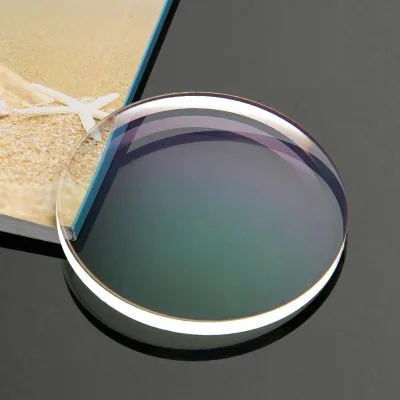
The durability and optical quality of anti-blue light lenses are heavily dependent on the coating technology applied. The supplied facts highlight a variety of coating choices, including UC (Ultra Clear), Hc (Hard Coat), Hmc (Hard Multi-Coating), Shmc, and specific color coatings like Green and Blue. The Hmc coating is particularly prominent in the data, appearing in multiple product standards such as "1.56 blue cut lens hmc" and "1.67 blue cut lens hmc." This suggests that Hard Multi-Coating is a standard industry practice for these lenses, likely providing a combination of scratch resistance, anti-reflective properties, and the blue light filtering function. The presence of "Green" and "Blue" coating options indicates that the anti-reflective layer can be tuned to reflect specific wavelengths, which may influence the perceived color of the lens when viewed from the outside or the residual reflection color.
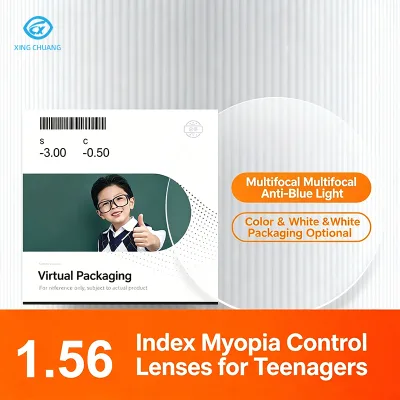
Customization is a significant advantage in this sector. The data explicitly states that customization is available, allowing buyers to tailor products to specific market demands. This includes the ability to choose envelope packaging, with options for white or colored designs based on the buyer's specifications. Additionally, the power ranges and refractive indices allow for a degree of product differentiation. For instance, a buyer targeting a premium market might focus on the 1.67 index with a high Abbe value and Hmc coating, while a value-oriented segment might prioritize the 1.56 index. The "Key Word" "1.67 Asp UV420 Blue Cut Hmc Lens" suggests that some products may also offer aspheric design and specific UV protection up to 420nm, which are valuable features for comprehensive eye protection. Buyers should verify if the "UV Protection" mentioned in the function attributes covers the full UV spectrum or if it is limited to specific wavelengths, as this impacts the overall safety profile of the lens.
Cost Drivers and Pricing Dynamics
The pricing of anti-blue light ophthalmic lenses is influenced by a complex interplay of material costs, refractive index, coating complexity, and order volume. The observed listed price range in the market spans from $0.10 to $120.00 USD. This wide disparity is not merely a reflection of brand markup but is driven by the technical specifications of the lens. A basic 1.56 single vision lens with standard Hmc coating will likely fall at the lower end of this spectrum, whereas a 1.67 aspheric lens with advanced blue cut technology and high Abbe value will command a premium price. The Minimum Order Quantity (MOQ) also acts as a primary cost driver, with observed ranges from 1 to 5,000 units.
Buyers should anticipate that lower unit prices are often contingent on higher order volumes. The ability to source small quantities (MOQ of 1) suggests that some suppliers cater to sample orders or small retailers, but the unit cost for these small batches will likely be higher than bulk pricing. Conversely, orders approaching the 5,000-unit threshold may unlock significant economies of scale. The specific gravity and diameter of the lens also impact the cost, as larger blanks (75mm) and materials with lower specific gravity (1.28) may incur higher material costs. Furthermore, the "Guarantee" period of 3 to 5 years observed in the data suggests that manufacturers are confident in the durability of their coatings, which may be factored into the pricing model. Buyers should not assume that a lower price automatically implies inferior quality; rather, they should correlate the price with the specific combination of index, coating, and Abbe value required for their application.
Supplier Evaluation and Quality Assurance
Evaluating suppliers for anti-blue light lenses requires a rigorous approach to verifying claims against observable facts. The data indicates that the products originate from Danyang, China, a region known for its optical manufacturing capabilities. While the brand "Seesen" is mentioned in the context of specific products, buyers should not rely on a single brand name for their entire supply chain. Instead, they should evaluate suppliers based on their ability to provide consistent technical specifications. The presence of multiple product standards, such as "1.56 Single Vision Lenses" and "1.67 Blue Cut Lenses," suggests that a capable supplier should have the manufacturing flexibility to produce various indices and designs.
Quality assurance should focus on the consistency of the coating and the optical clarity. The "Guarantee" of 3 to 5 years is a strong indicator of a supplier's confidence in their product, but buyers should seek written documentation regarding the terms of this guarantee. This includes understanding what constitutes a defect and the process for claims. The "Abbe Value" variance (32, 36, 40) observed in the data highlights the need for batch-to-batch consistency checks. A supplier that cannot guarantee a specific Abbe value range for a given order may be introducing optical inconsistencies that could lead to customer complaints. Additionally, the "Coating Choice" options (UC, Hc, Hmc, etc.) should be verified through physical inspection or third-party testing to ensure the coating adheres to the claimed specifications. Buyers should also verify the "Power Range" capabilities of the supplier, ensuring they can meet the specific prescription requirements of their end-users, particularly for high myopia or high astigmatism cases.
Compliance, Standards, and Long-Term Procurement
While the provided data does not explicitly confirm compliance with specific international standards beyond the product-specific standards like "1.56 blue cut lens hmc," buyers must remain vigilant regarding regulatory compliance. The mention of "ISO 8980" in the low-confidence background suggests that this standard, which pertains to ophthalmic optics, is relevant to the industry. However, buyers should not assume that all listed products are automatically ISO 8980 compliant. Instead, they should request certification documents or test reports from suppliers to verify that the lenses meet the necessary safety and performance criteria for their target markets.
Long-term procurement considerations involve the stability of the supply chain and the adaptability of the product line. The "Customization" availability is a key factor here, as it allows buyers to respond to changing market trends, such as the increasing demand for specific UV protection levels or aesthetic lens colors. The "Envelope" customization options also allow for branding opportunities, which can be a significant differentiator in competitive markets. Buyers should also consider the "Specific Gravity" and "Diameter" specifications when planning inventory, as these physical attributes affect shipping costs and frame compatibility. A supplier that offers a wide range of diameters (65mm, 70mm, 75mm) and specific gravities provides greater flexibility for sourcing frames and lenses that match. Finally, the "Guarantee" period of 3 to 5 years suggests a long-term commitment to product quality, which should be a central component of any supplier contract to mitigate the risk of premature coating failure or optical degradation. By focusing on these technical and operational factors, buyers can build a resilient and high-quality supply chain for anti-blue light ophthalmic lenses.
FAQs
What refractive indices are available for anti blue light ophthalmic lenses?
The available refractive indices are 1.56 and 1.67 for resin-based lenses. These options support various functions including myopia, astigmatism, and presbyopia correction with specific power ranges up to +/- 20.00 diopters.
Which coating choices are offered for these ophthalmic lenses?
Standard coating choices include UC, Hc, Hmc, Shmc, Green, and Blue. The Hmc coating is frequently used for blue cut lenses to ensure durability and anti-reflective properties alongside UV protection.
How long is the guarantee period for anti blue light ophthalmic lenses?
The guarantee period typically ranges from 3 to 5 years. This warranty reflects the manufacturer's confidence in the coating durability and optical performance of the resin lenses produced in Danyang, China.
Can I customize the packaging for anti blue light ophthalmic lenses?
Yes, customization is available for the envelope packaging. Buyers can choose between white envelopes or colored designs based on their specific branding requirements and market preferences.
What is the transmission rate for these anti blue light ophthalmic lenses?
The transmission rate is greater than 97% for the listed products. This high transmission ensures that the blue light blocking function does not significantly compromise overall light throughput or visual brightness.
Which lens diameters are available for anti blue light ophthalmic lenses?
Available lens diameters include 65mm, 70mm, and 75mm. These dimensions determine the maximum frame size the lens can accommodate without requiring excessive edging during the manufacturing process.
What is the Abbe value range for these ophthalmic lenses?
The observed Abbe values range from 32 to 40 depending on the specific product model. A higher Abbe value like 40 suggests superior color fidelity, while lower values may correlate with higher refractive indices.
What is the minimum order quantity for anti blue light ophthalmic lenses?
The minimum order quantity ranges from 1 to 5000 units. Lower unit prices are often contingent on higher order volumes, while small batches are available for sample orders or small retailers.